Are Robotic Lawn Mowers Worth It in Edmonton? A Complete Buyer's Guide
A few years ago, a robotic mower in an Edmonton yard drew a crowd of curious neighbours. Today they're a common sight across the city, quietly working their way around backyards in Terwillegar, Windermere, and the mature neighbourhoods closer to the core.
The category has also become genuinely confusing to shop. You'll see boundary wire models, RTK models, vision models, and hybrids that combine several systems, with prices ranging from under $1,000 to well over $10,000. The marketing copy for each one promises a perfect lawn.
This guide sorts through it with Edmonton conditions in mind: how to size a mower to your actual lawn, which navigation system suits your property, what installation involves, and the winter storage routine that keeps your investment healthy through an Alberta winter. Since fall is the quiet season for lawn equipment, it's also the ideal time to research a spring purchase without pressure.
Are Robot Mowers Worth It in Alberta? Start With How You Use Your Weekends
A robotic mower makes the most sense when you value your time, want a consistently tidy lawn, and have a yard the machine can reach without constant help.
Here's what you get in exchange for the upfront cost:
- Frequent, light cuts. A robotic mower trims a little grass often instead of a large amount once a week. The fine clippings fall back into the turf and break down quickly.
- Quiet operation. Battery-powered robotic mowers run far quieter than gas mowers, which matters on Edmonton's closely spaced residential lots.
- Your weekends back. Once the boundaries are set, the mower runs on a schedule you control from your phone.
The trade-offs are worth weighing honestly. You'll still need a trimmer for edges along fences and beds. The yard needs to be reasonably clear of toys, hoses, and fallen branches. And in Alberta, there's an annual winter storage routine, which we cover below.
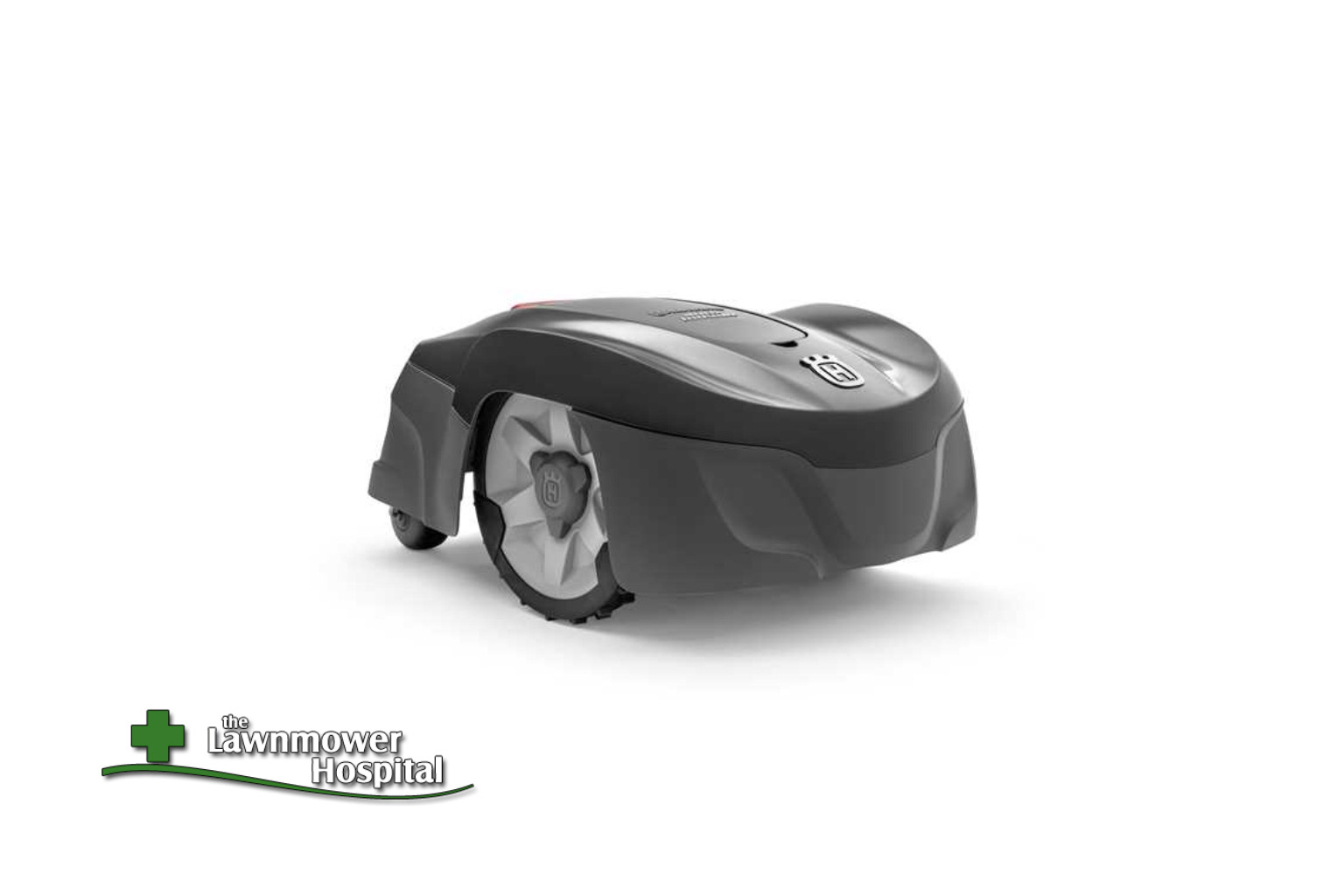
For Edmonton buyers, the entry point is more accessible than many people expect. The Lawnmower Hospital's robotic lineup includes the Husqvarna Automower 115H, rated for 0.4 acre, at $899.99, and the Segway i105N, rated for 500 square metres, at $1,199.95, based on listed pricing at the time of writing.
How to Match Robotic Mower Capacity to Your Lot Size
Every robotic mower carries a maximum area rating, and the most common buying mistake is choosing a model rated right at the edge of your lawn size.
Area ratings assume reasonably simple conditions. Narrow passages, multiple separate lawn zones, slopes, and lots of trees and beds all add travel time and reduce how much ground the mower can realistically cover. Husqvarna even lists many of its ratings with a plus or minus 20 percent range to reflect that variability.
A practical approach:
- Measure your actual turf, excluding the house, driveway, deck, and garden beds. A typical Edmonton infill lot carries far less grass than its total square footage suggests.
- Count your zones. A front yard, back yard, and side passage connected by a narrow strip is a more demanding layout than one open rectangle.
- Buy with headroom. Choose a model rated comfortably above your measured area, especially if your yard is complex or sloped.
For reference, 1 acre equals roughly 4,047 square metres. The Segway i206 is rated for about 0.15 acre, which works out to around 600 square metres, and suits most standard city lots. Larger acreages around Sherwood Park, St. Albert, and Leduc County step up into models like the Kress KR174 at 1.75 acres or the Husqvarna 580L EPOS at 4 acres.
Best Robot Lawn Mower for a Small Yard
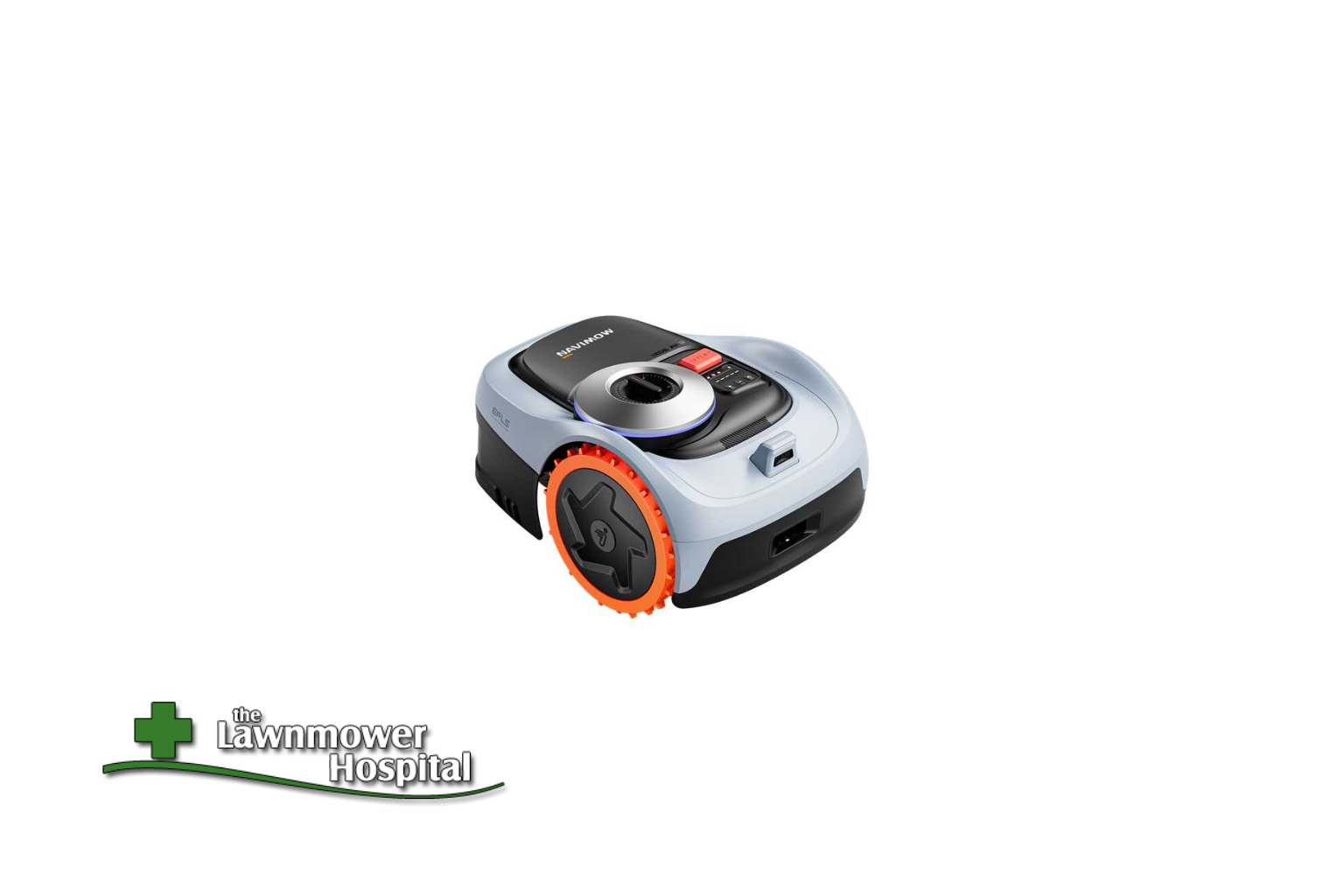
On compact properties, physical size and maneuverability matter as much as capacity. The Segway i206 measures 15.1 inches wide and weighs 26.56 pounds, with all-wheel drive, a 45 percent slope rating, and a cutting height range of 2 to 3.6 inches. That narrow body is a real advantage on infill lots, where a four-foot side yard often connects the front and back lawns. We covered side yard and gate clearance in detail in our guide to mowers for compact Edmonton lots.
Boundary Wire vs Wire Free Robotic Mowers in Canada
Navigation is the biggest decision you'll make, and the right choice depends heavily on what's growing over your yard.
Boundary Wire Models
A boundary wire is a low-voltage wire laid around the edge of the lawn, either pegged at the surface or buried just below it. The mower stays inside the loop. It's proven, reliable technology, and it works independently of satellite reception, which makes it a strong choice for heavily treed lots.
The main drawbacks are installation time and repairs. If the wire gets cut by an edger, a shovel, or core aerator tine, the mower loses its boundary signal and stops until the break is found and spliced. If you aerate in fall, mark your wire line first.
RTK Wire-Free Models
RTK stands for Real-Time Kinematic. It corrects standard satellite positioning down to centimetre-level accuracy, which lets you draw virtual boundaries on your phone instead of laying wire. Boundaries can be redrawn in minutes when you add a garden bed or a new patio.
RTK depends on a reasonably clear view of the sky. Dense tree cover, tall buildings, and narrow corridors between structures can weaken the signal. That's an important consideration in Edmonton, where the city owns roughly 90,000 elm trees and neighbourhoods like Strathcona, Westmount, and Highlands are known for their mature, elm-lined streets.
Correction data reaches the mower in one of two ways. Some systems use a reference station installed on your property; Husqvarna's EPOS models work this way, and we list the EPOS reference station separately at $1,199.99. Others use network RTK. Kress RTKn mowers, for example, operate without boundary wires or on-site antennas.
Hybrid RTK and Vision Models
Many current wire-free mowers pair RTK with cameras so the machine can keep navigating through areas where satellite reception drops. The Segway i206 combines network RTK with vision positioning and uses a 140 degree camera for obstacle avoidance. It also maps your lawn automatically after you set it down.
As a quick rule of thumb: newer, more open lots suit RTK well, while mature treed lots favour boundary wire or a hybrid system, and complex yards with obstacles benefit most from vision assistance.
Slopes, Obstacles, and Installation Expectations
Slopes. Every model lists a maximum slope rating. If your yard includes a steep berm or a walkout slope toward a ravine, look at all-wheel drive models. Husqvarna's AWD Automowers and Kress's 4X4 models are built for that kind of terrain.
Obstacles. Camera-based obstacle avoidance helps the mower steer around toys, tools, and pets. Even so, a quick sweep of the yard before a scheduled run remains good practice, and keeping children and pets off the lawn while the mower operates is the safest habit.
Installation. Boundary wire setups take the longest, since the full perimeter and any islands around trees or beds need wire. Wire-free models usually involve placing the charging station, connecting to the app, and walking or mapping the boundary. Either way, you'll want a level spot for the charging station with access to an outdoor outlet, along with a clear path to the lawn.
Robotic Mower Winter Storage in Alberta
This is where Edmonton robotic mower ownership differs most from the generic buying guides written for milder climates. When considering robotic mower winter storage Alberta homeowners need to take precautions.
Husqvarna's own winter storage guidance is clear and applies well across brands:
- Fully charge the mower, then switch it off before storage to protect battery health.
- Clean the mower and charging station thoroughly, including the body, chassis, and blade disc, and check the charging contacts for corrosion or debris.
- Store it indoors in a dry place above 0°C.
That last point matters a lot here. An unheated Edmonton garage or shed spends weeks well below freezing, so above freezing in practice means a heated garage, basement, or utility room.
Husqvarna also recommends bringing the charging station and power supply indoors. If the station has to stay outside, they advise keeping it connected to power and the boundary and guide wires all winter. Keep in mind that if you move the charging station, you'll need to reset its position in the app before spring.
Robotic mowers also fit neatly into a healthy fall routine. In our guide to closing out your lawn season, we recommend a final cut of 2 to 2.5 inches to reduce snow mold risk. Most robotic mowers can be lowered into that range for their last few weeks of the season before storage.
Choosing Your Robotic Lawn Mower in Edmonton
So, are robotic mowers worth it in Edmonton? For homeowners who want a consistently trimmed lawn, quieter operation, and their weekends back, they're one of the most practical upgrades available today. The key is matching the machine to your property: size it with headroom, choose navigation based on your tree cover, and plan for an indoor winter home.
The Lawnmower Hospital carries robotic mowers from Husqvarna, Segway, Kress, and Mammotion, covering everything from compact city lots to multi-acre commercial properties. Our parts and service team supports these machines long after the sale, and financing is available on major purchases.
Bring us your lot measurements, a few photos of your yard, and a sense of your tree cover, and we'll help you narrow it down. Contact us for a consultation, call 780-437-1851, or visit our showroom at 7555 72A Street NW. The off-season is the best time to plan, so you're ready to go the moment the grass starts growing.