Gas vs. Battery Lawn Mowers: Which One Makes Sense for Edmonton Homeowners?
If you're shopping for a new mower in Edmonton, you've probably noticed the display floor has changed. Battery-powered models now sit right next to the gas machines, and in some cases they outnumber them. The technology has improved dramatically over the past few years, and the old assumption that electric means "underpowered" simply isn't accurate anymore.
But Edmonton doesn t possess a mild climate. We deal with short growing seasons, long storage winters that regularly dip below minus 30, and clay-heavy yards that can go from soggy to bone-dry in a couple of weeks. Those conditions change the gas vs battery lawn mower equation in ways that most national buying guides never address.
This is a lawn mower buying guide Edmonton homeowners will appreciate. We'll compare both platforms on the factors that actually matter here: cutting power, runtime, maintenance costs, cold-weather battery storage, noise, and the yard size where each option makes the most sense.
Cutting Power: Can Battery Mowers Keep Up?
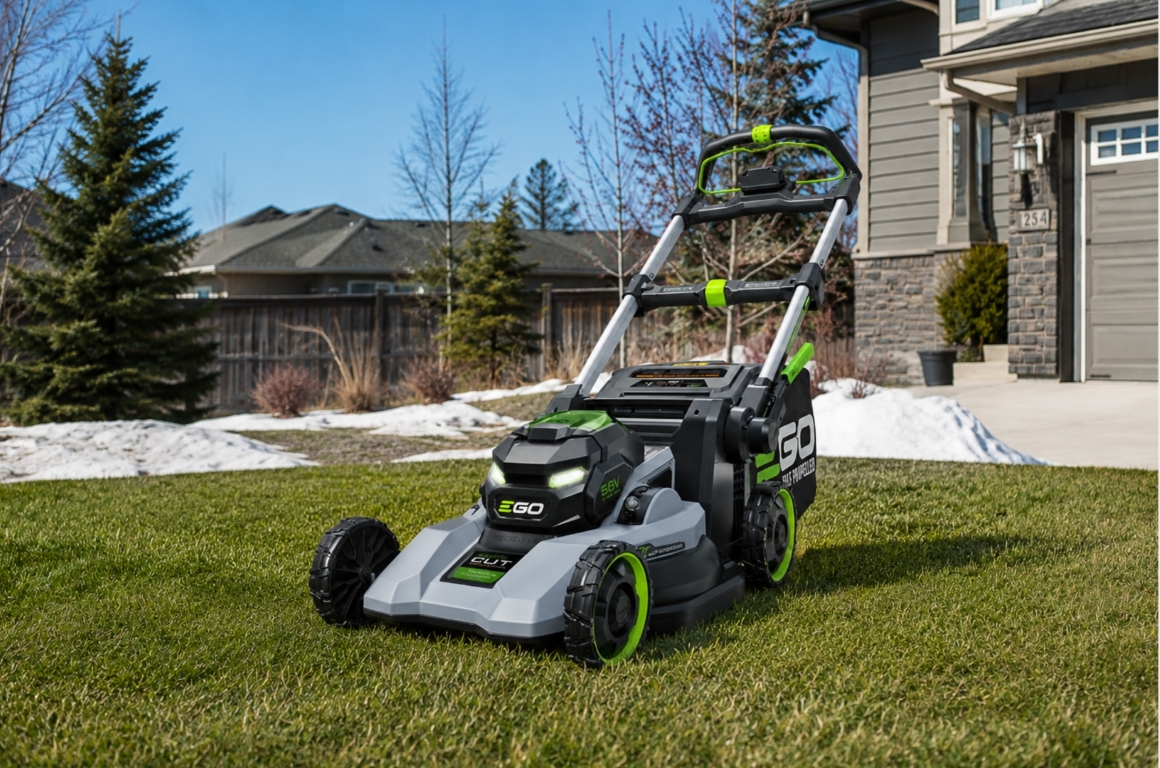
This used to be the easy win for gas. Not anymore. Modern battery-powered mowers use brushless motors that deliver peak torque instantly, while a gas engine has to rev up to reach full power. On a well-maintained lawn with regular mowing, most mid-range to high-end battery mowers cut just as cleanly as their gas equivalents.
Where gas still has a clear edge is in tough conditions. If you've let your yard go for three weeks during a rainy stretch (it happens to all of us), a gas engine can muscle through thick, wet growth without bogging down. A battery mower in the same situation may need multiple passes, which burns through runtime faster.
For routine weekly mowing on a typical Edmonton residential lot, a quality battery mower handles the job without issue. For larger properties, commercial work, or anyone who regularly tackles overgrown grass, gas still delivers more consistent brute-force performance.
Runtime and Yard Size: Where Each Platform Fits
This is the factor that matters most for choosing the best lawn mower for Edmonton properties, and it comes down to simple math.
Consumer Reports' recent expert tests found that the average battery walk-behind mower's run time was 45 to 50 minutes per charge, enough to easily handle a quarter acre, even on somewhat sloped land. That covers the majority of Edmonton's residential lots, especially in established neighbourhoods and newer infill developments.
Modern batteries typically provide 45 to 90 minutes of runtime, sufficient for most suburban lots under one acre. However, those numbers assume dry, regularly cut grass. Tall, thick growth or damp conditions drain batteries noticeably faster. A mower rated for 60 minutes under ideal conditions might deliver closer to 35 to 40 minutes in real-world Edmonton spring conditions when the grass is lush and slightly damp from overnight dew.
Here's a general yard-size guide:
- Under 1/4 acre: Battery handles this comfortably on one charge. No second battery needed.
- 1/4 to 1/2 acre: Battery works, but a spare battery provides insurance on heavy growth days. Budget an extra $150 to $300 for the second battery.
- Over 1/2 acre: Gas becomes the more practical choice unless you're prepared to invest in multiple batteries or a high-end battery riding mower.
- Commercial or multi-property use: Gas is still the standard for crews that need unlimited runtime across multiple properties in a single day.

Battery Lawn Mower Cold Weather Storage: An Edmonton Reality
One of the biggest factors in the electric mower vs gas mower Alberta debate is how each machine handles long, freezing winters. This is where the Edmonton conversation separates from every generic buying guide online. Our winters last roughly six months, with sustained temperatures well below freezing. That matters a lot for battery-powered equipment.
Lithium-ion batteries are sensitive to temperature changes. Most batteries do best when stored between 40°F and 80°F (4°C and 27°C). An unheated Edmonton garage or shed can easily drop to minus 20 or colder for weeks at a time, which is well outside the safe storage range.
Never charge lithium-ion batteries in freezing temperatures. This can cause permanent internal damage.
If you buy a battery mower and live in Edmonton, plan on removing the battery and storing it indoors over winter. Many manufacturers recommend storing batteries at around 40 to 60% state of charge for long-term storage, which provides the best balance between preventing deep discharge and minimizing storage stress. Check on the charge level every couple of months through the winter and always let the battery come up to room temperature before charging it in the spring. You should also be sure to keep the battery charged and stored at the appropriate temperature if you have a handheld blower or snowblower/snow shovel – then you’re using your investment all year long.
Gas mowers have their own winter prep requirements, of course, including draining or stabilizing fuel, changing oil, and cleaning the carburetor. But gas engines are generally more tolerant of cold storage. A properly winterized gas mower sitting in a cold garage will fire up in spring with minimal fuss. If you'd prefer to hand off the winterization entirely, our parts and service team handles full seasonal maintenance for both gas and battery equipment.
Maintenance Costs Over Time
This is one of the strongest arguments for going electric. A gas mower requires oil changes, air filter replacements, spark plug swaps, fuel stabilizer, and periodic carburetor cleaning. None of those apply to a battery mower. Outside of blade sharpening (which both platforms need), a battery mower is essentially maintenance-free during the cutting season.
Charging a mower battery costs about 30 cents versus $3 to $5 for gas. Over a typical season of 25 to 30 mowing sessions, that's roughly $7.50 versus $75 to $150 in fuel costs.
However, the long-term cost picture has a catch. Battery packs degrade over time. After three to five years of regular use, you may notice reduced runtime. Replacement batteries typically run $150 to $400 depending on the voltage and brand. That's a real cost to factor in, though it's offset by years of saved fuel and maintenance expenses.
For a detailed look at seasonal gas mower maintenance and what it involves, our blog on how to tune up lawn equipment for peak season walks through the full checklist.

Noise: A Bigger Factor Than You'd Think
If you mow early in the morning or have close neighbours (as most Edmonton homeowners do), noise matters. Gas mowers typically produce 90 to 95 decibels, which is roughly equivalent to a food blender running right next to your ear. Battery mowers usually register between 70 and 80 decibels, a significant reduction that makes early weekend mowing a lot more neighbour-friendly.
For commercial operators working on residential properties, quieter equipment can also mean fewer noise complaints from property managers and HOAs, which translates to fewer headaches on the job.
Gas vs Battery Lawn Mower Edmonton | Which Platform Fits Your Situation?
Rather than declaring a universal winner, here's how to match the right mower to your actual needs:
A battery mower makes the most sense if: you have a standard Edmonton residential lot (under half an acre), you want minimal maintenance, you're comfortable storing the battery indoors over winter, and you value quieter operation.
A gas mower makes the most sense if: your property is larger than half an acre, you regularly deal with tall or thick growth, you run a commercial operation that needs all-day runtime, or you want a machine that tolerates cold garage storage without special handling.
Consider owning both if: you operate a landscaping business and want a quiet battery mower for noise-sensitive residential clients alongside a gas machine for heavy-duty commercial properties.
If you're still not sure which direction to go, that's a perfectly normal place to be. The best approach is to talk through your specific yard size, grass conditions, and mowing habits with someone who knows the equipment inside and out. Our team at The Lawnmower Hospital carries both gas and battery models from brands like EGO, Husqvarna, and Toro, and we're happy to walk you through the tradeoffs in person.
Talk to Edmonton's Lawn Equipment Experts Before You Buy
A mower is a multi-year investment, and picking the wrong platform costs you time, money, and frustration. Whether you're leaning toward gas, battery, or just want to compare models side by side, our showroom and service team are here to help.
Stop by The Lawnmower Hospital at 7555 72A Street NW in Edmonton, give us a call at 780-437-1851, or browse our current inventory online. We'll help you find the best lawn mower for Edmonton, your yard, and your budget.